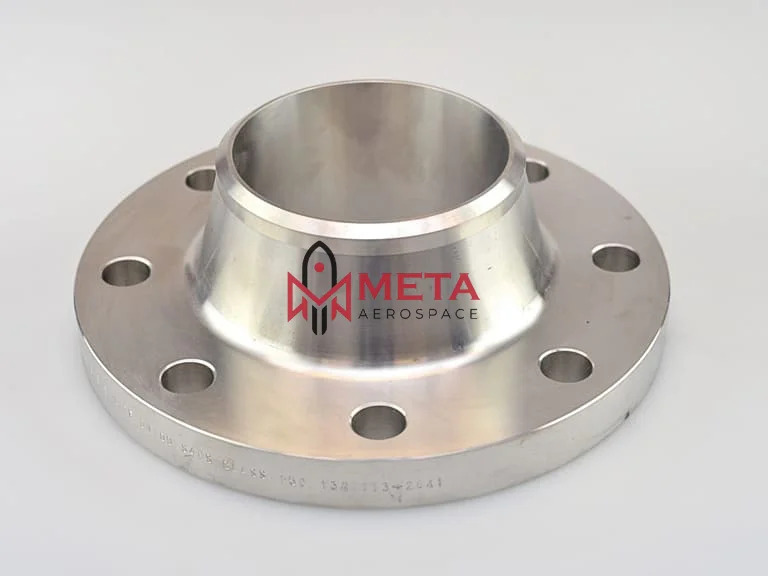
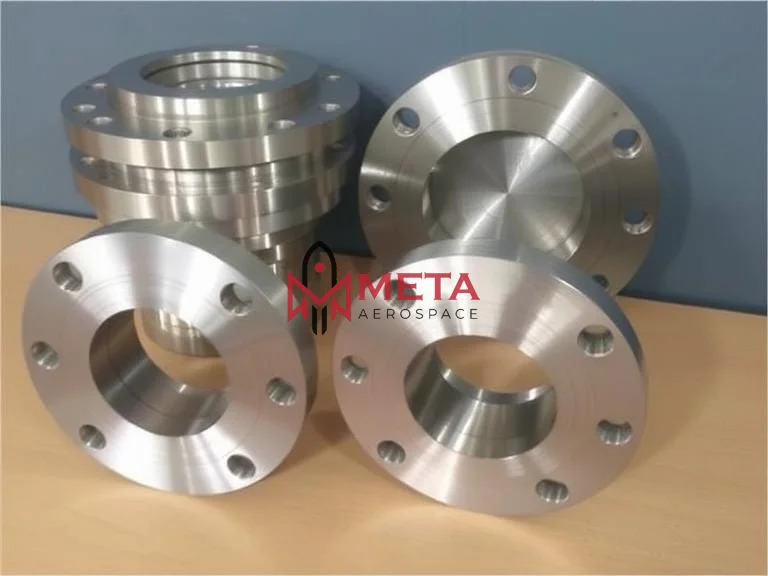
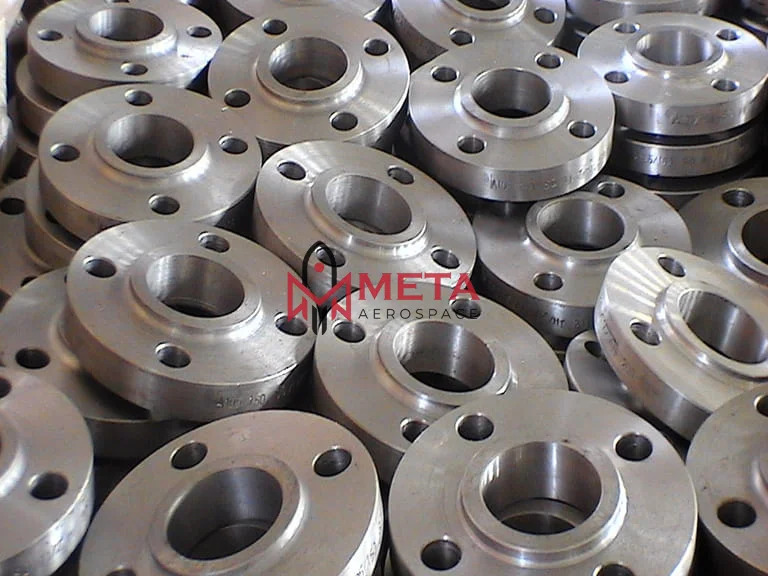
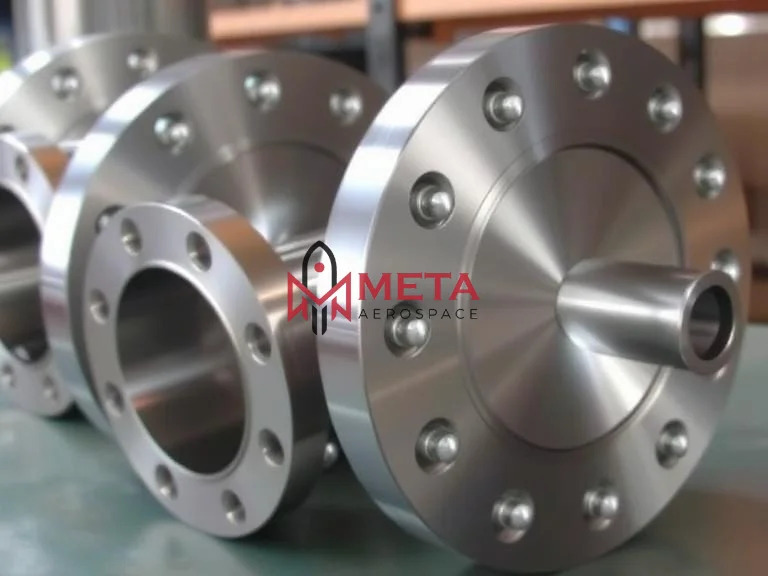
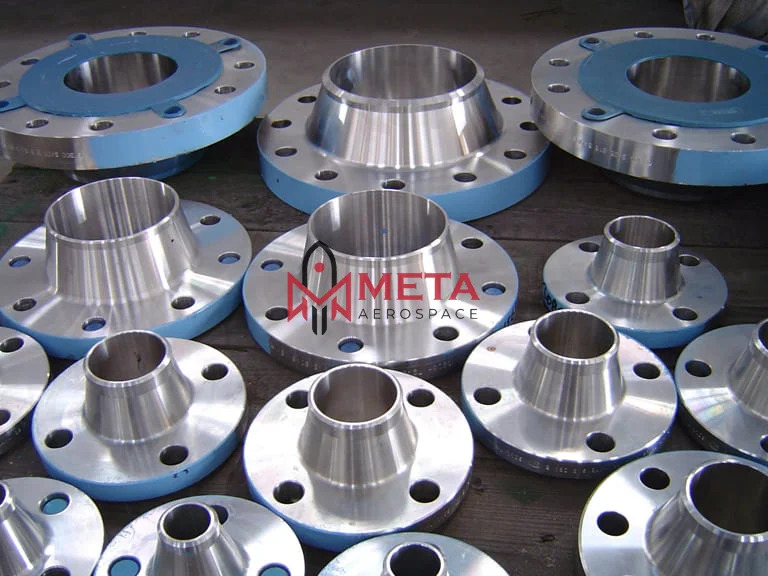
About ASTM A182 Gr F22 Alloy Steel Flanges
What Are Specification ASTM A182 Gr F22 Alloy Steel Flanges?
| Specification | ASTM A182 F1 Flanges |
|---|
| Other Standard | B16.47 Series A & B/ B16.48, BS4504/ GOST |
|---|
| Production Technique | Forged/ Heat treated and machined |
|---|
| Manufacturer of | Forged/ Threaded/ Screwed / Plate |
|---|
| Available Size | NPS 1" To 16 Manufacturer In India |
|---|
| List Of Schedule | SCH 5S, SCH 10, SCH 40, SCH 80, SCH 120, SCH 160, SCH 180. |
|---|
| Standard And Dimensions | DIN 2501/ DIN 2527/ JIS/ ISO/ P235GH/ API/ EN 1092-2/ EN/ BS/ DIN 2561/ EN 1092-1 |
|---|
| Manufacturer Types | Slip On/ Threaded/ Reducing/ Weld Neck/ Socket Weld/ Blind/ Lap Joint |
|---|
| Flange Test | Hydrostatic testing machine/ UI trasonic flaw detector/ X-ray detector/ Direct-reading Spectrograph/ Magnetic particle detector |
|---|
| Coating | Anti-rust Paint/ Zinc Plated/ Oil Black Paint/ Yellow Transparent/ Cold and Hot Dip Galvanized |
|---|
| Methods | Forging
Casting
Rolling
Cutting |
|---|
| EN Standard | 6Bar/ 10Bar/ 16Bar/ 25Bar/ 40Bar |
|---|
| DIN Standard | PN6/ PN10/ PN16/ PN25/ PN40/ PN64 |
|---|
| JIS Standard | 5K/ 10K/ 16K 20K/ 30K/ 40K/ 63K |
|---|
| Flange Equipment | Pushing Machine/ electric bevelling machine/ Press machine/ Bending machine/ Sand-blasting machine etc |
|---|
| Face Type | Raised Face
Flat Face
Ring Type Joint |
|---|
| Most common types | Weld Neck Ring Flanges (WNRF)
Blind Ring Flanges (BLRF)
Threaded Ring Flanges
Lap Joint Ring Flanges (LJRF)
Slip-On Ring Flanges (SORF)
Socket Weld Ring Flanges (SWRF)
Ring Type Joint Flanges (RTJF) |
|---|
| UNI Standard | 6 Bar/ 10 Bar/ 16 Bar/ 25 Bar/ 40 Bar |
|---|
| Supporting Material | Gasket/ Ring Joint/ Flange Bolts |
|---|
| Test Certificates | EN 10204/3.1B
Raw Materials Certificate
100% Radiography Test Report
Third Party Inspection Report, etc |
|---|
| Manufacturer Pressure Class | Class 150 (lb) up to 24"
Class 300 (lb) up to 20"
Class 600 (lb) up to 20"
Class 900 (lb) up to 16"
Class 1500 (lb) up to 10"
Class 2500 (lb) up to 8" |
|---|
Equivalent material Of ASTM A182 Gr F22 Alloy Steel Flanges?
| Trade Name | UNS | Name Of Steel | Use | Casting Equivalent | EN | Forging | Werkstoff |
|---|
| Alloy Steel F22 | K21590 | 2.1/4Cr-1Mo | HP Steam | ASTM A217 WC9 | 10CRM0910 | ASTM A182 F22 | 1.7380 |
Chemical Composition Of ASTM A182 Gr F22 Alloy Steel Flanges?
| Grade | C | si | mn | s | P | Cr | Mo |
|---|
| ASTM A182 F22 | 0.05 - 0.15 | 0.50 max | 0.30 - 0.60 | 0.040 | 0.040 | 2.00 - 2.50 | 0.87 - 1.13 |
|---|
Mechanical Properties Of ASTM A182 Gr F22 Alloy Steel Flanges?
| Grade | Tensile Strength (MPa) min | Yield Strength 0.2% Proof (MPa) min | Elongation (% in 50mm) min | Hardness |
|---|
| Rockwell B (HR B) max | Brinell (HB) max |
|---|
| F22 | 415 | 205 | 20 | | 170 max |
|---|
Precision Engineering and Standards ComplianceEach F22 alloy steel flange is meticulously manufactured through forging and precise machining, maintaining a dimensional tolerance of 0.05 mm. Conforming to global standards (ASTM A182, ANSI, DIN, BS, JIS, EN, ISO), these flanges ensure reliability and universal compatibility for critical applications across various industries.
Heat Treatment and Rigorous TestingTo guarantee optimal mechanical properties, the flanges undergo normalization and tempering. Comprehensive non-destructive testing including ultrasonic, hydrostatic, and magnetic particle inspection verifies their integrity and performance under high pressure and elevated temperatures.
Versatile Applications and Customized SolutionsF22 alloy steel flanges are available in a range of shapes and sizes (1/2 to 48, DN15 to DN1200), and end types (Weld Neck, Slip On, Blind, Socket Weld, Threaded). Their enhanced strength, corrosion resistance, and high purity make them ideal for oil & gas, petrochemical, and power generation sectors. Custom dimensions and protected packaging ensure safe delivery and tailored fit for your project.
FAQs of ASTM A182 Gr F22 Alloy Steel Flanges:
Q: How do face types like RF, FF, and RTJ affect the performance of F22 alloy steel flanges?
A: The choice of face typeRaised Face (RF), Flat Face (FF), or Ring Type Joint (RTJ)influences gasket selection, sealing integrity, and pressure handling capabilities. RF and RTJ faces are ideal for high-pressure, high-temperature environments, while FF is commonly selected for lower pressure applications or compatibility with cast equipment.
Q: What is the recommended process for installing ASTM A182 Gr F22 Alloy Steel Flanges?
A: Installation involves aligning the flange with the mating pipe or equipment, selecting a suitable gasket, and using proper torque to tighten bolts uniformly. Welding procedures must align with the specific end type (e.g., weld neck, slip on, etc.). Post-installation testing, such as hydrostatic and ultrasonic inspection, is advised to confirm leak-tight connections.
Q: When should I use F22 alloy steel flanges over carbon steel or other alloys?
A: F22 alloy steel flanges are preferred when higher strength, corrosion resistance, and reliability at elevated temperatures (up to 600C) are requiredsuch as in oil & gas pipelines, power plants, and pressure vessels. Their superior mechanical properties and chemical stability make them suitable for harsh service environments.
Q: Where can ASTM A182 Gr F22 flanges be used effectively?
A: These flanges are widely utilized in oil & gas, petrochemical, and power generation industries for joining piping systems, heat exchangers, and pressure vessels. Their high-pressure and high-temperature tolerance ensures dependable performance in demanding infrastructural and industrial setups.
Q: What are the benefits of choosing ASTM A182 Gr F22 alloy steel flanges from an Indian manufacturer, exporter, or supplier?
A: Indian manufacturers and exporters offer global quality standards, stringent testing, and customized dimensions, supported by robust packaging (wooden cases, pallets, bubble wrap). You benefit from competitive pricing, technical support, and reliable supply chains for projects worldwide.
Q: How is the quality and purity of these flanges ensured during production?
A: Quality is ensured through careful control of chemical composition (Cr, Mo, C, Mn, Si) and advanced forging processes. Rigorous non-destructive testing and heat treatments provide consistent mechanical properties, structural integrity, and high purity alloy steel, meeting ASTM A182 standards.

 Send Inquiry



 Send Inquiry

 Send Inquiry
 English
 Spanish
 French
 German
 Italian
 Chinese (Simplified)
 Japanese
 Korean
 Arabic
 Portuguese