Nickel 201 Flanges About
What Are Specification Nickel 201 Flanges?
| Specifications : | ASTM B564 / ASME SB564 |
|---|
| Dimensions : | ANSI/ASME B16.5, B 16.47 Series A & B, B16.48, BS4504, BS 10, EN-1092, DIN, etc. |
|---|
| Standard : | ANSI Flanges, ASME Flanges, BS Flanges, DIN Flanges, EN Flanges, etc. |
|---|
| Size : | 1/2" (15 NB) to 48" (1200NB) |
|---|
| Class/Pressure : | 150#, 300#, 600#, 900#, 1500#, 2500#, PN6, PN10, PN16, PN25, PN40, PN64 etc. |
|---|
| Flange Face Type : | Flate Face (FF), Raised Face (RF), Ring Type Joint (RTJ) |
|---|
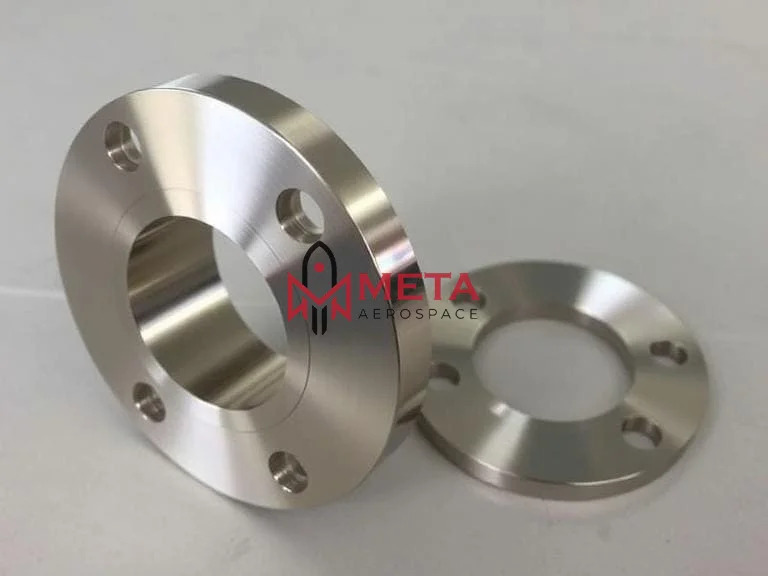
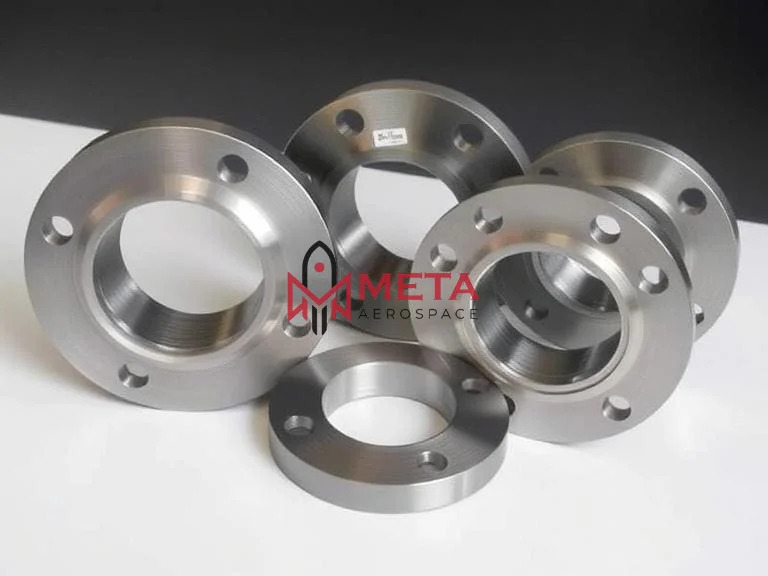
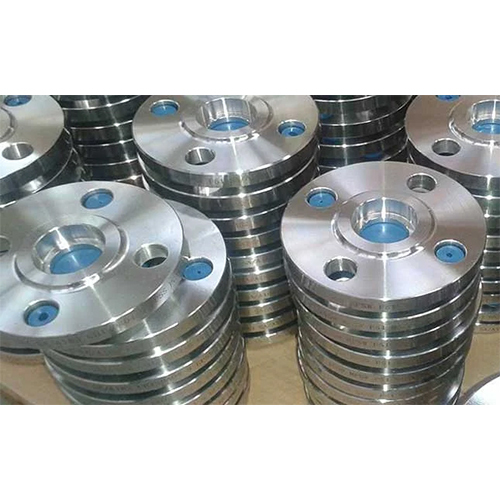
| Form : | Slip on flanges, Socket weld flanges, Forged flanges, Blind flanges, Welding neck flange, Ring type joint flange, Spectacle blind flange, Reducing flange, Threaded / Screwed flange, Tongue and Groove flange, Long weld neck flange, Plate flange, Flate Face flanges, ASME B16.5 flanges. |
|---|
Equivalent material Of Nickel 201 Flanges?
| STANDARD | UNS | WERKSTOFF NR. | AFNOR | EN | JIS | BS | GOST |
|---|
| Nickel 201 | N02201 | 2.4066 | N-100M | Ni 99.2 | NW 2201 | NA 11 | -2 |
|---|
Chemical Composition Of Nickel 201 Flanges?
| Grade | Ni | Fe | Cu | C | Mn | S | Si |
|---|
| 201 | 99.0 min | 0.40 | 0.25 | 0.15 | 0.35 | 0.01 | 0.35 |
|---|
Mechanical Properties Of Nickel 201 Flanges?
| Grade | Density | Melting Point | Yield Strength (0.2%Offset) | Tensile Strength | Elongation |
|---|
| 200-201 | 8.9 g/cm3 | 1446 C (2635 F) | Psi 21500 , MPa 148 | Psi 67000 , MPa 462 | 45 % |
|---|
Robust Material SpecificationsProduced from Nickel 201 alloy (UNS N02201), these flanges feature a minimum purity of 99.6% Ni. With a density of 8.89 g/cm and a high melting point of 1446C (2635F), they demonstrate excellent performance even in aggressive and high-temperature environments. Their Rockwell B 60 max hardness ensures structural integrity under varied operational demands.
Precision Engineering and Standards ComplianceEach flange is manufactured according to international standards, such as ASTM B564, ASME SB564, DIN, EN, JIS, BS, and GB. Their end connections comply with ANSI B16.5, B16.47, and B16.48, ensuring seamless integration with piping systems. The flanges are ISO 9001:2015 certified, assuring consistent quality and reliability.
Versatile Applications and CustomizationNickel 201 Flanges are widely used in petrochemical, oil & gas, power generation, marine, chemical, and pharmaceutical industries due to their corrosion resistance and high tensile strength ( 377 MPa). Custom dimensions, surface finishes, and packing options (wooden cases or pallets) cater to specific project requirements globally.
FAQs of Nickel 201 Flanges:
Q: How are Nickel 201 Flanges typically installed in industrial piping systems?
A: Nickel 201 Flanges can be installed using welded or threaded connections, depending on the flange type. Weld neck, slip on, and socket weld flanges require welding, while threaded flanges are simply screwed onto matching threaded pipes. Proper alignment and torque are essential to ensure leak-proof connections.
Q: What are the key benefits of using Nickel 201 Flanges in corrosive environments?
A: Nickel 201 Flanges offer exceptional corrosion resistance, high purity (min. 99.6% Ni), and superior mechanical properties, making them optimal for environments with strong acids, caustics, and variable temperatures. Their performance minimizes maintenance and extends the service life of piping systems in demanding industries.
Q: When should I choose Raised Face (RF), Flat Face (FF), or Ring Type Joint (RTJ) flanges?
A: Raised Face (RF) flanges are used for general industrial applications requiring better sealing. Flat Face (FF) flanges are best for low-pressure systems where surface marring must be avoided. Ring Type Joint (RTJ) flanges provide secure, leak-resistant seals for high-pressure and high-temperature environments.
Q: Where can Nickel 201 Flanges be applied most effectively?
A: These flanges are suited for critical sectors like petrochemical, oil & gas, power generation, chemical processing, marine, and pharmaceuticals. Their ability to withstand temperatures from -196C to 300C and comply with international standards makes them ideal for use worldwide.
Q: What is the manufacturing process for Nickel 201 Flanges?
A: Nickel 201 Flanges are manufactured using forging followed by CNC machining for precise dimensions. The manufacturing process ensures a smooth, polished, or machined finish as required, and rigorous quality control checks are performed to meet standards like NACE MR0175 and ISO 9001:2015.
Q: How should Nickel 201 Flanges be stored or packaged for shipping?
A: Flanges are typically packaged in wooden cases or on pallets to prevent damage during transit. Custom packaging options can be provided as specified by the client, ensuring the product arrives in pristine condition ready for installation.
Q: What are the main advantages of selecting Nickel 201 Flanges from an ISO 9001:2015 certified manufacturer?
A: Purchasing flanges from an ISO 9001:2015 certified supplier guarantees consistent quality, traceable manufacturing processes, and compliance with international safety and performance standards. This enhances project reliability and minimizes supply chain risks.

 Send Inquiry



 Send Inquiry

 Send Inquiry
 English
 Spanish
 French
 German
 Italian
 Chinese (Simplified)
 Japanese
 Korean
 Arabic
 Portuguese