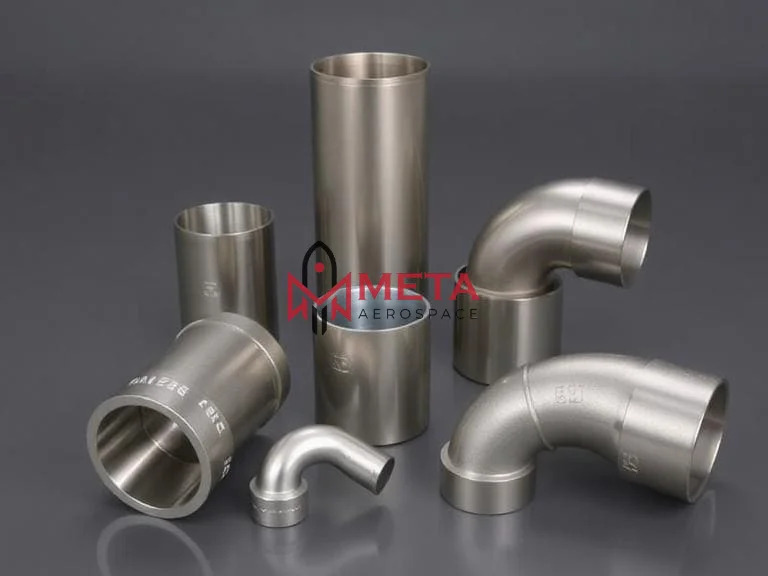
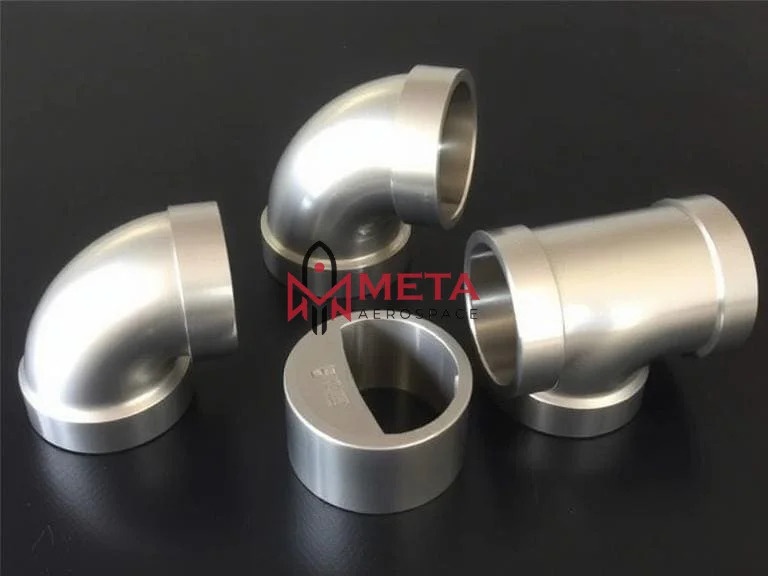
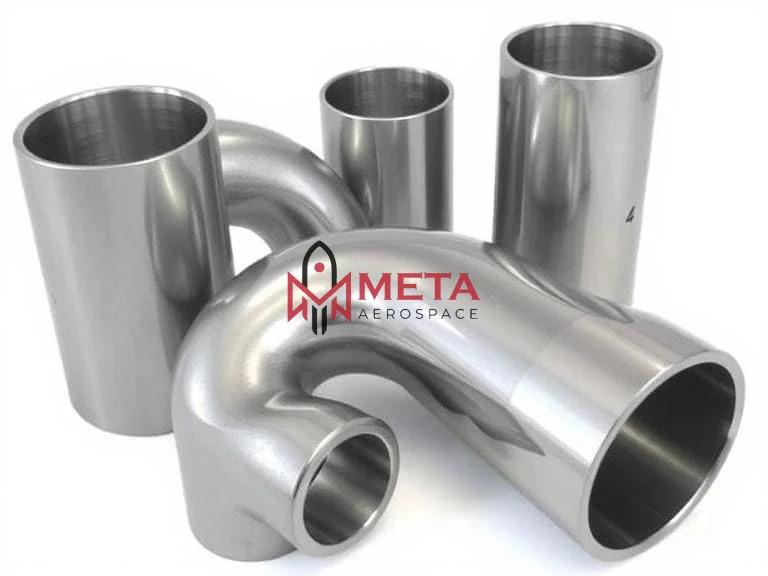
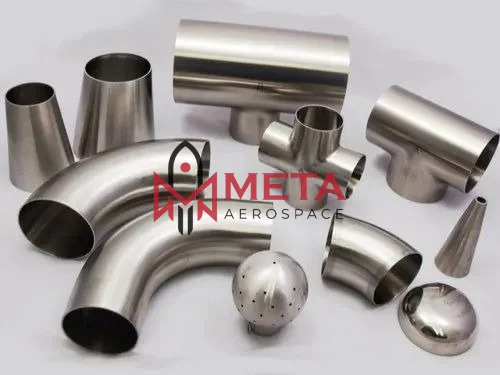
About Stainless Steel 316Ti Pipe Fittings
What Are Specification Stainless Steel 316Ti Pipe Fittings?
| Standards : | ASTM, ASME |
|---|
| Designation : | A 403, SA 403 |
|---|
| Dimension Standard : | ASME/ANSI B16.9, ASME B16.28, MSS-SP-43 |
|---|
| Grade : | Stainless Steel 304L Buttweld Pipe Fittings, SS 304L Butt weld |
|---|
| Type : | Seamless, Welded |
|---|
| Thickness : | Sch 5s, Sch 10s, Sch 40s, Sch 80s, Sch 160s, Sch XXS |
|---|
| Size : | 1/2" to 24" |
|---|
| Two Joint / Two Halve 304 Butt weld Fittings Size : | 6" to 48" |
|---|
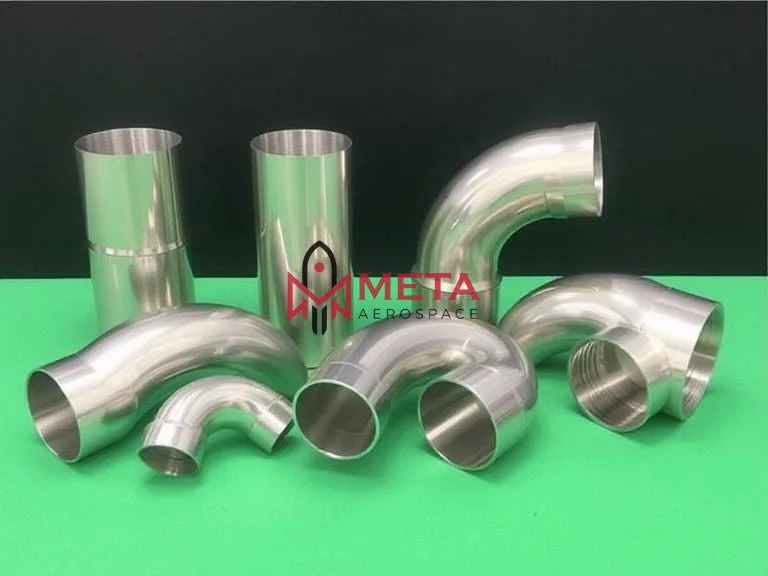
| Types of Butt weld Fittings : | Equal Tee, Nipple, Long Radius Elbow, Reducing Tee, Elbows, Swage Nipple, Short Radius Elbow, Reducer, Barrel Nipple, 90 Deg Elbow, Concentric Reducer, Reducing Nipple, 45 Deg Elbows, Eccentric Reducer, Bend, 180 Deg Elbow, End Cap, 1D Elbow, 3D Elbow, Stubend, 5D Elbow, Cap, Piggable Bend, Long Stubend, Tee, Short Stubend, Long Radius Bend |
|---|
Equivalent material Of Stainless Steel 316Ti Pipe Fittings?
| STANDARD | WERKSTOFF NR. | UNS | JIS | BS | GOST | AFNOR | EN |
|---|
| SS 316Ti | 1.4571 | S31635 | SUS 316Ti | 320S31 | 08Ch17N13M2T | Z6CNDT17123 | X6CrNiMoTi17-12-2 |
Chemical Composition Of Stainless Steel 316Ti Pipe Fittings?
| Grade | C | Mn | Si | P | S | Cr | Mo | Ni | N |
|---|
| SS 316Ti | 0.08 max | 2.0 max | 0.75 max | 0.045 max | 0.030 max | 16.00 18.00 | 2.00 3.00 | 10.00 14.00 | 68.395 min |
Mechanical Properties Of Stainless Steel 316Ti Pipe Fittings?
| Density | Melting Point | Tensile Strength | Yield Strength (0.2%Offset) | Elongation |
|---|
| 8.0 g/cm3 | 1400 C (2550 F) | Psi 75000 , MPa 515 | Psi 30000 , MPa 205 | 35 % |
Superior Corrosion & Heat ResistanceStainless Steel 316Ti Pipe Fittings stand out for their excellent resistance to corrosive agents, including chlorides and acidic environments. The addition of titanium not only prevents sensitization at elevated temperatures but also enhances the fittings durability, making them ideal for environments with high heat and aggressive chemicals.
Versatile Applications Across IndustriesEngineered for use in oil & gas, petrochemical, power plants, food processing, and industrial plumbing, these pipe fittings handle a wide range of media and pressures. Their availability in seamless or welded forms, multiple thicknesses, and end connections ensures adaptability to specific installation requirements and system designs.
Precision Engineering and ComplianceEach fitting is produced with strict adherence to international standards such as ASTM A403/ASME SA403, PED 2014/68/EU, and NACE MR0175. Manufactured to tight tolerances of 0.5 mm, these products guarantee dependable performance. Surface treatments like pickling and passivation maintain a clean, corrosion-resistant finish.
FAQs of Stainless Steel 316Ti Pipe Fittings:
Q: How do Stainless Steel 316Ti Pipe Fittings provide enhanced corrosion resistance?
A: These fittings incorporate titanium stabilization, significantly improving their corrosion resistance, particularly against chlorides and acidic media. This makes them highly reliable in environments found in chemical processing, oil & gas, and marine applications.
Q: What manufacturing processes are used to produce 316Ti pipe fittings?
A: 316Ti pipe fittings are manufactured through forging or fabrication, available in both seamless and welded forms. These methods ensure structural integrity, strength, and a consistent quality suitable for high-pressure and high-temperature environments.
Q: When should I choose 316Ti grade fittings over standard 316 stainless steel?
A: 316Ti grade is preferred when the fittings will be exposed to elevated temperatures (up to 870C) or require superior resistance to intergranular corrosion, such as in power plants, refineries, or processing facilities where thermal stability is critical.
Q: Where can these pipe fittings be installed?
A: Stainless Steel 316Ti Pipe Fittings are well-suited for installation in industrial plants, petrochemical facilities, food processing lines, and pipelines handling aggressive chemicals, especially where exposure to high temperatures or corrosive substances is expected.
Q: What is the typical process for packaging and delivering these fittings?
A: The fittings are securely packaged in wooden boxes, cartons, or wrapped in bubble wrap to prevent damage during transit. This ensures that products arrive at the installation site in optimal condition, ready for immediate use.
Q: How are these fittings connected and what end types are available?
A: They can be connected via butt weld, socket weld, or threaded joints, with end types including plain, bevel, and various thread standards such as BSP and NPT. This versatility accommodates different piping systems and installation needs.
Q: What are the key benefits of using 316Ti pipe fittings in industrial applications?
A: Key benefits include outstanding corrosion and heat resistance, reliable mechanical properties, precise dimensional tolerances, compliance with global standards, and high versatility in applicationfrom high-pressure oil & gas lines to hygienic food processing systems.

 Send Inquiry



 Send Inquiry

 Send Inquiry
 English
 Spanish
 French
 German
 Italian
 Chinese (Simplified)
 Japanese
 Korean
 Arabic
 Portuguese