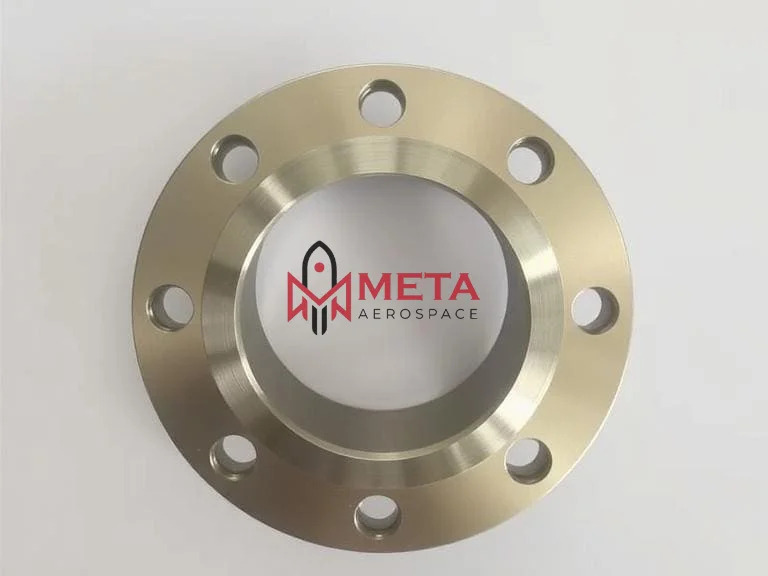
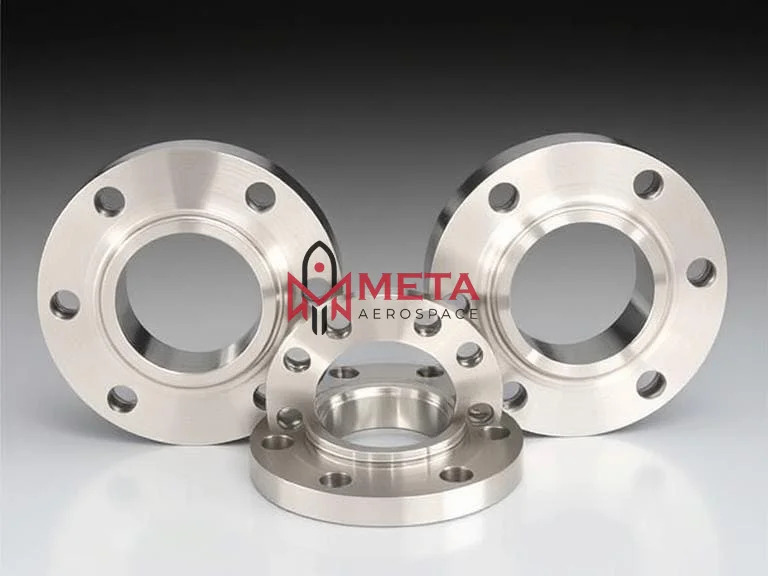
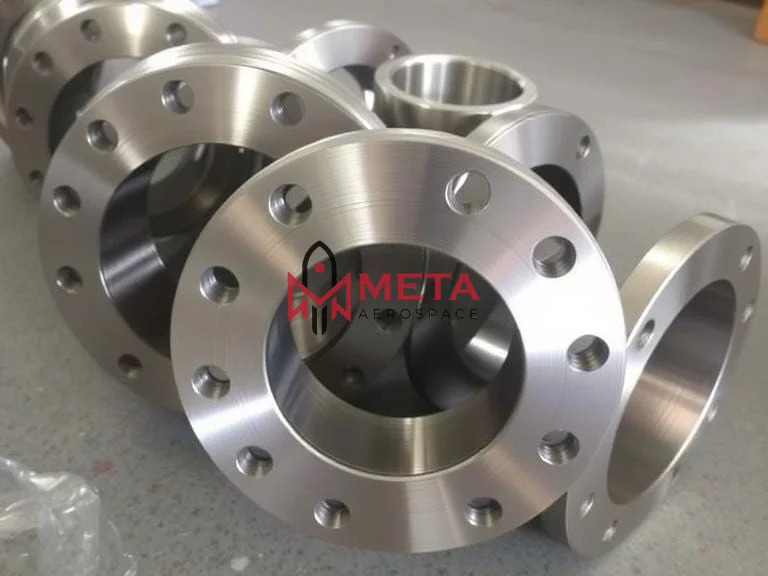
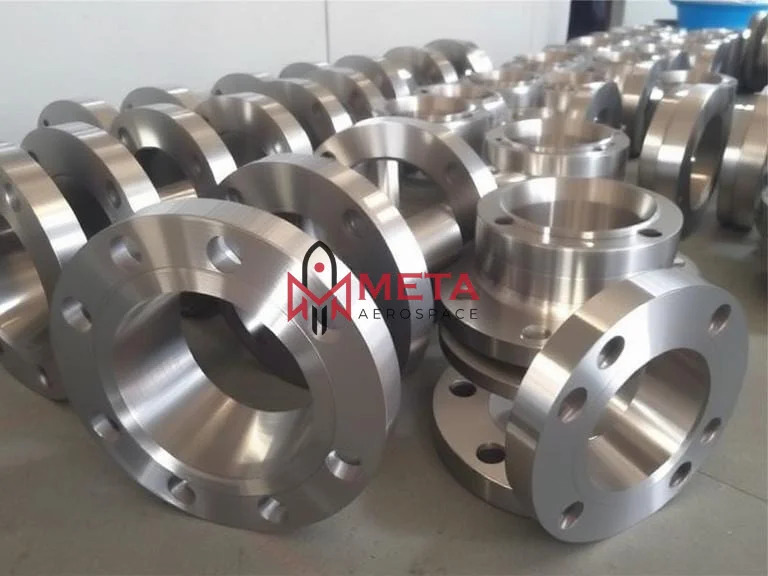
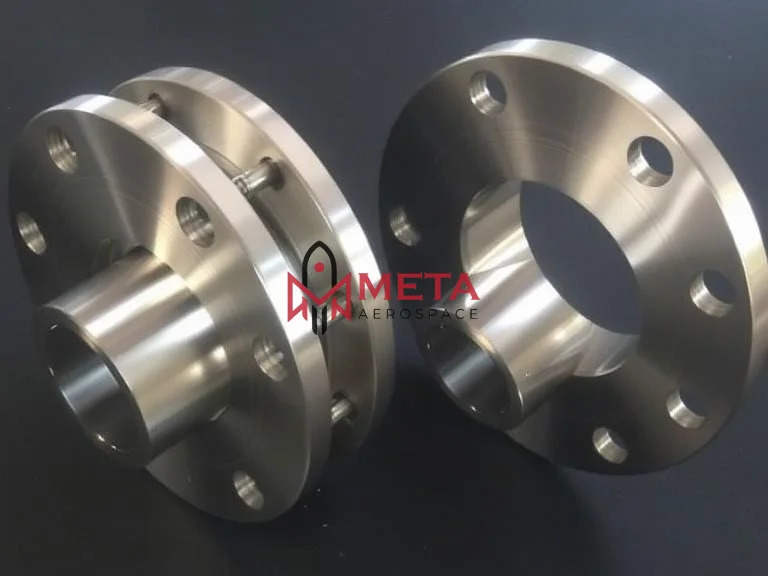
About Stainless Steel 316Ti Flanges
What Are Specification Stainless Steel 316Ti Flanges?
| Specifications List | ASTM A182 / ASME SA182 |
|---|
| Class / Pressure Rating | 150#, 300#, 600#, 900#, 1500#, 2500#, PN6, PN10, PN16, PN25, PN40, PN64 etc. |
|---|
| Size Chart | 1/2 (15 NB) to 48 (1200NB) |
|---|
ASTM Standards
| ANSI/ASME B16.5, B16.48, BS4504, B 16.47 Series A & B, BS 10, EN-1092, DIN, etc. |
|---|
| Standard s | ANSI, ASME, BS, DIN, EN etc. |
|---|
Equivalent material Of Stainless Steel 316Ti Flanges?
| STANDARD | WERKSTOFF NR. | UNS | JIS | BS | GOST | AFNOR | EN |
|---|
| SS 316Ti | 1.4571 | S31635 | SUS 316Ti | 320S31 | 08Ch17N13M2T | Z6CNDT17123 | X6CrNiMoTi17-12-2 |
|---|
Chemical Composition Of Stainless Steel 316Ti Flanges?
| Grade | C | Mn | Si | P | S | Cr | Mo | Ni | N |
|---|
| SS 316Ti | 0.08 max | 2 max | 0.75 max | 0.045 max | 0.030 max | 16.00 18.00 | 2.00 3.00 | 10.00 14.00 | 68.395 min |
|---|
Mechanical Properties Of Stainless Steel 316Ti Flanges?
| Density | Melting Point | Tensile Strength | Yield Strength (0.2%Offset) | Elongation |
|---|
| 8.0 g/cm3 | 1399 C (2550 F) | Psi 75000 , MPa 515 | Psi 30000 , MPa 205 | 35 % |
Unmatched Corrosion ResistanceWith the inclusion of titanium in grade 316Ti, these stainless steel flanges offer robust resistance to corrosion, especially in aggressive and high-temperature applications. The premium quality, low carbon content, and precise forging or casting guarantee long-term performance, making them suitable for harsh industrial environments.
Comprehensive Range of Face and End ConnectionsChoose from Raised Face (RF), Flat Face (FF), or Ring Type Joint (RTJ) face types, paired with end types like Slip On, Weld Neck, Socket Weld, Blind, Threaded, or Lap Joint. This extensive variety provides compatibility with diverse piping systems, ensuring a proper fit and safe, reliable connections for every project requirement.
Engineered for Strength and DurabilityManufactured to meet strict ISO, PED, and NACE standards, Stainless Steel 316Ti Flanges achieve a minimum tensile strength of 515 MPa and yield strength of 205 MPa with 35% minimum elongation. Solution annealing further enhances their mechanical properties, guaranteeing reliability, even under high pressure and temperature conditions.
FAQs of Stainless Steel 316Ti Flanges:
Q: How are Stainless Steel 316Ti Flanges commonly used in industrial applications?
A: These flanges are widely utilized in industries such as petrochemical, oil & gas, chemical processing, and power generation. Their high corrosion resistance and strength make them ideal for connecting pipelines, valves, and equipment that handle corrosive fluids or operate at elevated temperatures.
Q: What are the main face types available for Stainless Steel 316Ti Flanges and how do they differ?
A: 316Ti flanges are available with Raised Face (RF), Flat Face (FF), and Ring Type Joint (RTJ). RF is widely used for high-pressure applications and provides a better seal. FF is suitable for low-pressure environments or systems using cast iron valves. RTJ is preferred for critical, high-pressure connections requiring metal-to-metal sealing.
Q: When should I choose a Weld Neck versus a Slip On or Socket Weld flange end type?
A: Weld Neck flanges are best for high-pressure, high-temperature environments due to their superior strength and resistance to dishing. Slip On flanges are easier to install and suitable for lower-pressure systems, while Socket Weld flanges are used for small-diameter, high-pressure pipelines where tight connections are necessary.
Q: What processes are used in the manufacturing of these flanges?
A: Stainless Steel 316Ti Flanges are produced using precise forging or casting methods, followed by solution annealing heat treatment. This process enhances their corrosion resistance and mechanical strength, resulting in a durable and long-lasting product.
Q: Where are these flanges typically exported or supplied from?
A: They are primarily manufactured, exported, supplied, and traded from India by specialized companies who follow international standards like ASTM, ASME, ISO, PED, and NACE to ensure quality and compliance for global markets.
Q: What are the key benefits of choosing Stainless Steel 316Ti over standard stainless steels?
A: 316Ti contains titanium, improving its resistance to intergranular corrosion at high temperatures. This longevity and reliability in harsh environments surpass standard 304 or 316 grades, making 316Ti flanges excellent for demanding chemical, petrochemical, and power generation operations.

 Send Inquiry



 Send Inquiry

 Send Inquiry
 English
 Spanish
 French
 German
 Italian
 Chinese (Simplified)
 Japanese
 Korean
 Arabic
 Portuguese